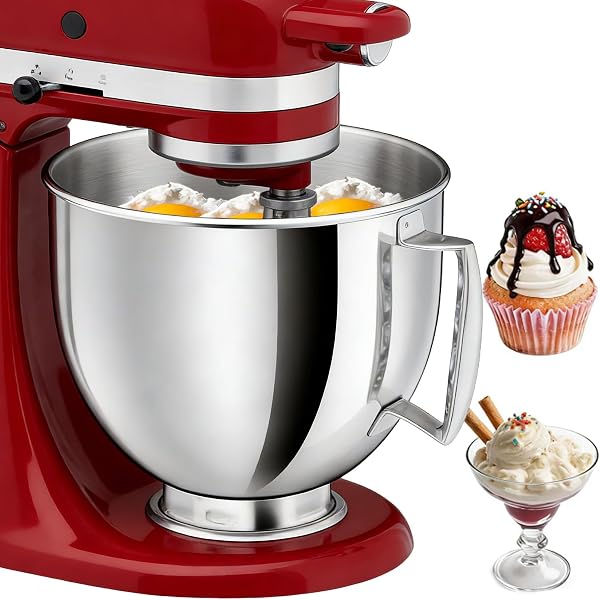
Is Stand Mixer Bowl dishwasher safe?
Sometimes — the stainless steel bowl body is typically dishwasher safe, but the lid, gasket, and any plastic or coated parts should be hand washed.
Quick facts
| Dishwasher safe? | Sometimes — Sometimes — with care |
|---|---|
| Category | Appliances |
| Source | AI-reviewed · manufacturer guidance & material science |
| Last checked | 2026-07-28 |
Why
Most stand mixer bowls are made of stainless steel (e.g., 304 or 18/10), which is highly resistant to dishwasher heat and alkaline detergent, so the bowl body can be safely washed on the top rack. However, many bowls include a plastic lid (often Tritan or polycarbonate) that may warp or cloud over time due to high heat. Silicone gaskets or seals can degrade, losing elasticity and causing leaks. Some bowls have a nonstick coating (e.g., KitchenAid's nonstick bowl) that will peel or blister after repeated dishwasher cycles. Manufacturer guidelines (e.g., KitchenAid) typically state that the bowl is top-rack safe but recommend hand washing the lid and gasket to prolong life. Always check the specific model: if the bowl has a painted exterior or decal, the dishwasher will cause fading or peeling.
How do you wash Stand Mixer Bowl?
- Remove the lid and any silicone gasket or seal.
- Hand wash the lid and gasket in warm soapy water with a soft sponge; rinse and dry thoroughly.
- Place the stainless steel bowl on the top rack of the dishwasher, away from the heating element.
- Use a mild detergent and avoid high-heat drying cycles (select air dry or open door after cycle).
- For nonstick bowls, hand wash only with a non-abrasive sponge to preserve the coating.
- Dry all parts immediately after washing to prevent water spots or mineral deposits.
What happens if you put Stand Mixer Bowl in the dishwasher?
If you put the entire stand mixer bowl (including lid and gasket) in the dishwasher, after one wash you may notice slight water spots on the stainless steel, which are cosmetic. The lid (if plastic) might appear slightly cloudy or warped if exposed to high heat. After repeated washes, the plastic lid can become brittle or misshapen, and the silicone gasket may lose its seal, causing leaks during use. For nonstick bowls, the coating will begin to peel or blister after a few cycles, leading to food sticking and potential flaking into food. The damage is primarily cosmetic for stainless steel bowls but functional for lids, gaskets, and nonstick coatings, requiring replacement of those parts.
Frequently asked questions
- Can I put the stand mixer bowl in the microwave?
- Only if the bowl is made of microwave-safe glass or ceramic. Stainless steel bowls are not microwave safe and will cause arcing. Plastic lids are generally not microwave safe unless labeled.
- What water temperature can the bowl withstand?
- Stainless steel bowls can withstand boiling water (212°F/100°C) without damage. Plastic lids typically have a lower heat tolerance, around 140-180°F (60-82°C), and may warp above that.
- Will the coating peel over time?
- Yes, if the bowl has a nonstick coating, repeated dishwasher use will cause peeling and blistering. Hand washing with soft sponges extends the coating's life.
- How often should the bowl be replaced?
- Stainless steel bowls can last indefinitely with proper care. Nonstick bowls may need replacement every 2-3 years if coating degrades. Plastic lids should be replaced if warped or cracked.
More appliances
Popular checks
Last updated 2026-07-28. General guidance — always check your product’s care label. How we verify · Dishwasher care guides.