Is Silicone Bundt Pan dishwasher safe?
Yes — silicone is inherently dishwasher safe, but use the top rack to avoid direct heating element contact.
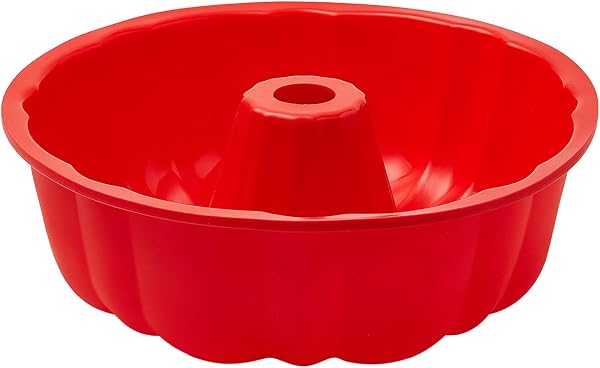
Quick facts
| Dishwasher safe? | Yes — Dishwasher safe |
|---|---|
| Category | Bakeware |
| Source | AI-reviewed · manufacturer guidance & material science |
| Last checked | 2026-07-28 |
Why
The Silicone Bundt Pan is made of 100% food-grade silicone, a thermoset polymer that is heat-stable up to about 450°F (232°C) and chemically inert to alkaline dishwasher detergents. Unlike metal or nonstick pans, silicone does not warp, rust, or lose its nonstick properties in the dishwasher. The primary risk is physical: if placed on the bottom rack near the heating element, intense direct heat can cause temporary softening or deformation, though permanent damage is rare. Most manufacturers (e.g., Wilton, Silpat) explicitly state silicone bakeware is dishwasher safe. There are no parts like lids or gaskets to worry about; the entire pan is one piece. Repeated dishwasher use may cause minor surface dullness or chalkiness from detergent residue, but this is cosmetic and does not affect performance.
How do you wash Silicone Bundt Pan?
- Remove any large food debris by rinsing the pan under warm water.
- Place the pan upside down on the top rack of the dishwasher, away from the heating element.
- Use a standard dishwasher detergent (no bleach or citrus additives that may stain silicone).
- Run a normal cycle with heated dry (or air dry to minimize residue).
- After the cycle, inspect for any stuck-on residue; if present, hand wash with mild soap and a soft sponge.
- Allow the pan to air dry completely before storing to prevent moisture trapping.
What happens if you put Silicone Bundt Pan in the dishwasher?
If you put a silicone Bundt pan in the dishwasher, nothing catastrophic happens. After one wash, the pan will come out clean and unchanged. After repeated washes, you may notice a slight white, chalky film on the surface — this is mineral or detergent residue, not damage. It can be removed by wiping with white vinegar. The silicone will not warp, crack, or lose its flexibility. The nonstick property remains intact because silicone is naturally nonstick and does not have a coating. The only functional risk is if the pan is placed on the bottom rack and the heating element causes temporary softening; once cooled, it returns to shape. Overall, the dishwasher is safe and convenient for silicone bakeware.
Frequently asked questions
- Can the silicone Bundt pan go in the microwave?
- Yes, silicone is microwave-safe up to about 450°F. It does not absorb microwaves and will not spark or melt under normal use.
- Will the silicone pan stain from tomato sauce or turmeric?
- Silicone can absorb some food pigments, causing temporary staining. This is cosmetic and can be removed by soaking in a baking soda paste or diluted bleach solution.
- Can I use metal utensils on the silicone pan?
- Yes, silicone is durable and resistant to cuts and scratches from metal utensils, though sharp edges may leave marks.
- How long does a silicone Bundt pan typically last?
- With proper care, a high-quality silicone pan can last 5–10 years. Over time, it may become slightly sticky or lose its shape, but it does not degrade like nonstick coatings.
More bakeware
Popular checks
Last updated 2026-07-28. General guidance — always check your product’s care label. How we verify · Dishwasher care guides.