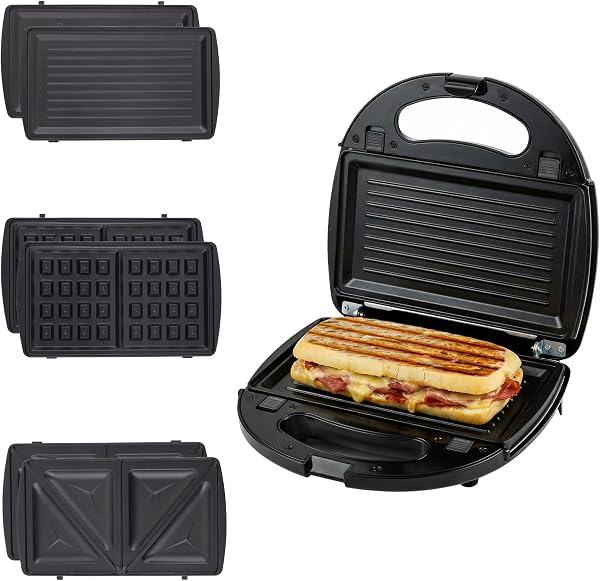
Is Sandwich Maker Plates dishwasher safe?
Sometimes — the metal plates are typically not dishwasher safe due to nonstick coating degradation, while the outer plastic housing may be top-rack safe if the manufacturer specifies.
Quick facts
| Dishwasher safe? | Sometimes — Sometimes — with care |
|---|---|
| Category | Appliances |
| Source | AI-reviewed · manufacturer guidance & material science |
| Last checked | 2026-07-28 |
Why
Sandwich maker plates are usually made of aluminum or steel with a nonstick coating (e.g., PTFE or ceramic). Dishwasher heat (up to 75°C/167°F) and alkaline detergents can break down the nonstick coating, causing peeling, flaking, and reduced release performance. The plastic housing may warp or discolor if not top-rack safe. Most manufacturers (e.g., Breville, Cuisinart) explicitly state that plates are not dishwasher safe; hand washing is recommended. The heating element and electrical components are never dishwasher safe. Part-specific: removable plates may be hand washed, but the base must never be submerged.
How do you wash Sandwich Maker Plates?
- Unplug the sandwich maker and let it cool completely.
- Wipe the outer housing with a damp cloth; do not immerse.
- Remove the plates if detachable; otherwise, wipe with a soft sponge.
- Hand wash plates in warm soapy water using a non-abrasive sponge.
- Rinse thoroughly and dry immediately with a soft cloth.
- Reattach plates only when completely dry.
What happens if you put Sandwich Maker Plates in the dishwasher?
If you put the entire sandwich maker in the dishwasher, water will enter the electrical components, causing short circuits and permanent damage. For removable plates, one wash may cause slight dulling of the nonstick surface; repeated washes lead to peeling, flaking, and rust on exposed metal. The plastic housing may warp or become brittle. Damage is functional: food will stick, and the appliance may become unsafe to use.
Frequently asked questions
- Can I use metal utensils on the nonstick plates?
- No, metal utensils will scratch and damage the nonstick coating. Use silicone, wood, or plastic utensils instead.
- How often should I replace the sandwich maker plates?
- Replace plates when the nonstick coating shows significant wear, peeling, or if food starts sticking excessively, typically every 2-3 years with regular use.
- Can I soak the plates in water to remove stubborn residue?
- Brief soaking is okay, but avoid prolonged soaking as water may seep into the heating element. Dry immediately.
- Is it safe to use cooking spray on the plates?
- Yes, but use sparingly. Excessive spray can build up and become sticky over time.
More appliances
Popular checks
Last updated 2026-07-28. General guidance — always check your product’s care label. How we verify · Dishwasher care guides.