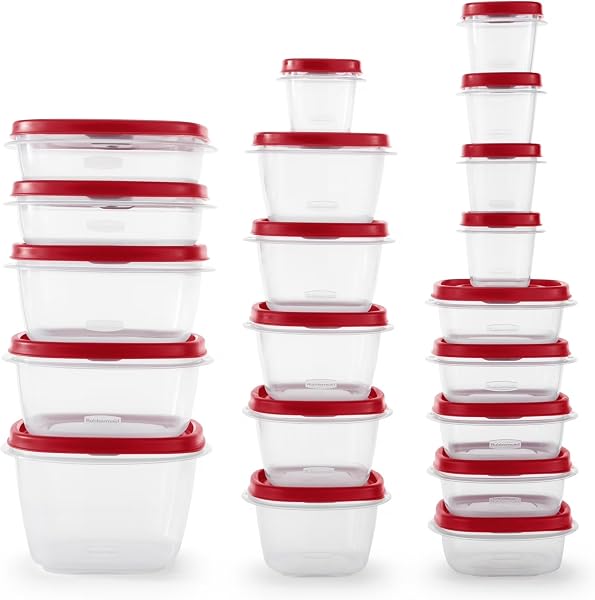
Is Rubbermaid Containers dishwasher safe?
Sometimes — the Tritan body is top-rack safe, but the lid and gasket should be hand washed.
Quick facts
| Dishwasher safe? | Sometimes — Sometimes — with care |
|---|---|
| Category | Containers |
| Source | AI-reviewed · manufacturer guidance & material science |
| Last checked | 2026-07-28 |
Why
Rubbermaid containers are typically made from Tritan (a BPA-free copolyester) for the body and polypropylene (PP) for the lid, with a silicone or thermoplastic elastomer (TPE) gasket. Tritan is generally dishwasher safe on the top rack, but prolonged high heat and alkaline detergents can cause clouding (etching) and warping over time. The lid's PP can warp or lose its seal, and the gasket may degrade, swell, or lose elasticity, leading to leaks. Rubbermaid's official care recommends top-rack washing for the body but hand washing the lid and gasket to preserve the seal. The main failure modes are: body clouding/etching, lid warping, and gasket seal degradation.
How do you wash Rubbermaid Containers?
- Disassemble the lid by removing the silicone gasket from its groove.
- Hand wash the gasket with mild dish soap and warm water, then rinse thoroughly.
- Wash the lid by hand with a soft sponge and mild detergent; avoid abrasive scrubbers.
- Place the Tritan body on the top rack of the dishwasher, away from the heating element.
- Use a gentle, non-citrus detergent to minimize etching.
- Air dry all components completely before reassembling.
- Reinsert the gasket into the lid groove, ensuring it is fully seated.
What happens if you put Rubbermaid Containers in the dishwasher?
If you put the entire Rubbermaid container (body, lid, and gasket) in the dishwasher, after one wash you may notice the gasket feels slightly looser or the lid fits less snugly. After repeated washes, the gasket can become permanently deformed, causing the lid to leak. The body may develop a cloudy, etched appearance (especially if washed on the bottom rack or with high-heat drying). The lid's PP can warp, leading to a poor seal. These effects are cumulative and mostly cosmetic for the body but functional for the lid and gasket, eventually requiring replacement of the lid or gasket.
Frequently asked questions
- Can Rubbermaid containers go in the microwave?
- Yes, the Tritan body is microwave-safe, but the lid should be removed or vented to avoid pressure buildup. The gasket may not withstand high microwave heat, so remove it before microwaving.
- What temperature can Rubbermaid containers withstand?
- Tritan is heat resistant up to about 212°F (100°C), making it safe for boiling water and dishwasher heat. However, prolonged exposure above 180°F may cause warping. The lid's PP can handle up to 230°F, but repeated high heat can degrade it.
- How often should I replace the gasket?
- Replace the gasket every 6-12 months or when you notice it is no longer sealing tightly, has cracks, or feels hard and brittle. Regular hand washing extends its life.
- Are Rubbermaid containers freezer safe?
- Yes, the Tritan body is freezer safe down to -40°F. However, leave headspace for expansion and avoid sudden temperature changes to prevent cracking.
More containers

Popular checks
Last updated 2026-07-28. General guidance — always check your product’s care label. How we verify · Dishwasher care guides.