Is Rubber Spatula dishwasher safe?
Sometimes — solid silicone rubber spatulas are dishwasher safe, but those with wooden handles or hollow cores are not.
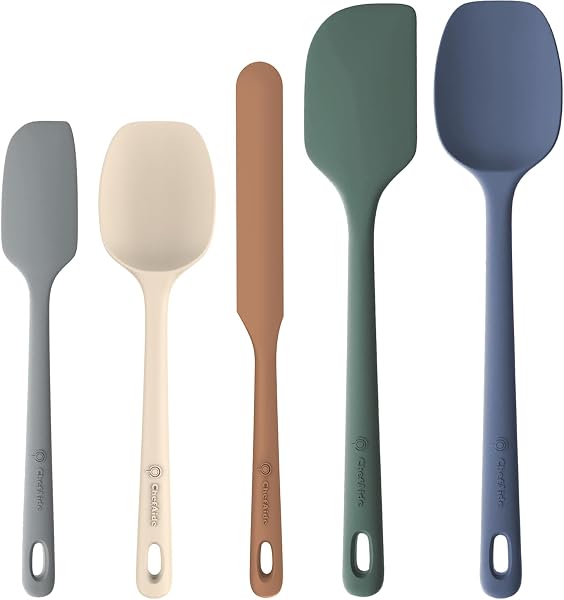
Quick facts
| Dishwasher safe? | Sometimes — Sometimes — with care |
|---|---|
| Category | Utensils |
| Source | AI-reviewed · manufacturer guidance & material science |
| Last checked | 2026-07-28 |
Why
The product is made of silicone rubber, which is heat-stable up to about 450°F and chemically inert, so it withstands dishwasher heat and alkaline detergent without degrading. However, many rubber spatulas have a wooden handle or a hollow core that can trap water. Wooden handles can crack, swell, or have their finish peel off due to moisture and heat. Hollow-core silicone spatulas can fill with water, leading to mold growth and eventual rupture. The specific failure modes for wood are warping, cracking, and finish peeling; for hollow silicone, it is water ingress and mold. Manufacturers like OXO and Di Oro typically state that solid silicone spatulas are dishwasher safe, but those with wood or hollow cores should be hand washed. Always check the specific construction: if it's one-piece solid silicone, it's safe; if it has a wooden handle or hollow core, it is not.
How do you wash Rubber Spatula?
- If the spatula has a wooden handle, do not submerge; wipe with a damp cloth and mild soap.
- For solid silicone spatulas, rinse immediately after use to prevent staining.
- Wash with warm soapy water and a non-abrasive sponge.
- For stubborn residue, soak in a baking soda paste for 15 minutes.
- Rinse thoroughly and dry with a lint-free cloth.
- Store in a utensil drawer or crock away from direct heat.
What happens if you put Rubber Spatula in the dishwasher?
If you put a solid silicone spatula in the dishwasher, it will come out clean and undamaged after one wash; repeated washes may cause slight discoloration from food dyes but no functional harm. However, if the spatula has a wooden handle, after one wash the wood may appear slightly raised or rough; after several washes, the handle can crack, the finish may peel, and the wood can swell, making the spatula uncomfortable to hold and prone to harboring bacteria. For hollow-core silicone spatulas, after one wash you might notice water inside; after repeated washes, the trapped water can lead to mold growth, and the spatula may eventually split open, rendering it unusable. The damage is functional and permanent for wood and hollow types.
Frequently asked questions
- Can a silicone spatula withstand high heat on the stovetop?
- Most silicone spatulas are heat-resistant up to 450-600°F, but they should not be left in a hot pan for extended periods as they can melt or discolor.
- Will silicone spatulas stain from tomato sauce or turmeric?
- Yes, silicone can absorb pigments from strongly colored foods, but this is cosmetic only and does not affect performance. Stains can be removed with a baking soda paste.
- Can I use a silicone spatula in a nonstick pan?
- Yes, silicone is non-abrasive and safe for nonstick coatings, unlike metal utensils.
- How often should I replace my silicone spatula?
- Replace it if you notice cracks, tears, or if the silicone becomes sticky or deformed, which can happen after years of use.
More utensils
Popular checks
Last updated 2026-07-28. General guidance — always check your product’s care label. How we verify · Dishwasher care guides.