Is Enamel Cookware dishwasher safe?
Sometimes — enamel cookware is generally not dishwasher safe because the high heat and harsh detergents can cause the enamel to dull, craze, or chip over time. However, some modern enameled cast iron pieces from brands like Le Creuset or Staub are labeled as dishwasher safe, though hand washing is still recommended to preserve the finish.
Quick facts
| Dishwasher safe? | Sometimes — Sometimes — with care |
|---|---|
| Category | Cookware |
| Source | AI-reviewed · manufacturer guidance & material science |
| Last checked | 2026-07-28 |
Why
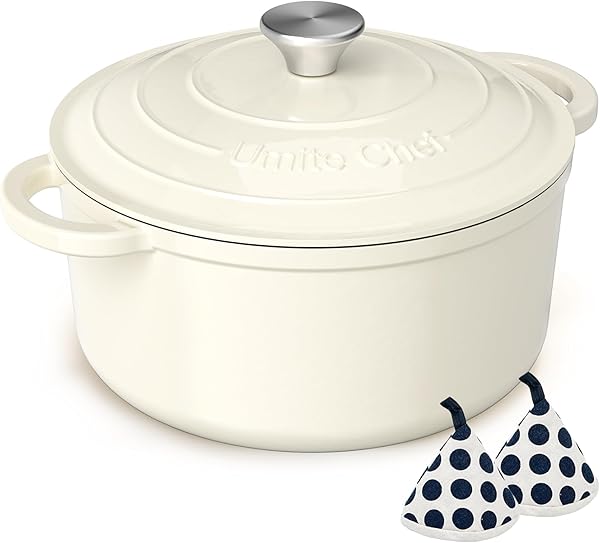
Enamel cookware is made of a glass-like coating fused to a metal base (usually cast iron or steel). The enamel is chemically resistant but can be damaged by the high heat (130-170°F) and alkaline detergents in dishwashers. Specific failure modes include: (1) dulling or loss of gloss from detergent etching, (2) crazing (fine cracks) from thermal shock, (3) chipping at edges from contact with other items, and (4) discoloration from mineral deposits. Manufacturers like Le Creuset state that their enameled cast iron is dishwasher safe but recommend hand washing to prevent dulling. For enameled steel (e.g., classic speckled cookware), dishwashing is strongly discouraged. The lid and body are both enameled, so they share the same risks; there are no separate gaskets or seals. Repeated machine washing can lead to permanent cosmetic damage and reduced nonstick properties.
How do you wash Enamel Cookware?
- Allow the cookware to cool completely before washing to avoid thermal shock.
- Hand wash with a soft sponge or cloth and mild dish soap in warm water.
- For stubborn food residue, soak in warm soapy water for 15-20 minutes, then scrub gently.
- Avoid abrasive pads (steel wool, scouring pads) that can scratch the enamel.
- Rinse thoroughly with clean water to remove all soap residue.
- Dry immediately with a soft towel to prevent water spots and mineral buildup.
- Store with a paper towel or cloth between stacked pieces to prevent chipping.
What happens if you put Enamel Cookware in the dishwasher?
If you put enamel cookware in the dishwasher, after one wash you may notice a slight dulling of the glossy finish. After repeated washes (5-10 cycles), the enamel can develop a cloudy, etched appearance due to detergent alkalinity. The surface may become rougher, making food stick more easily. In severe cases, the enamel can craze (fine cracks) or chip, especially at the rim or edges. These changes are primarily cosmetic but can affect cooking performance over time. Chipping exposes the underlying metal, which can rust (if cast iron) or corrode (if steel), leading to functional damage. The damage is cumulative and permanent; once the enamel is etched or chipped, it cannot be restored.
Frequently asked questions
- Can enamel cookware be used on all stovetops?
- Yes, enameled cast iron works on gas, electric, induction, and ceramic stovetops. Enameled steel may not be induction-compatible unless specified.
- Is enamel cookware oven safe?
- Most enamel cookware is oven safe up to 400-500°F (204-260°C), but check the manufacturer's guidelines. The metal handles may get hot, and sudden temperature changes can crack the enamel.
- How do I remove burnt-on food from enamel?
- Fill the pot with water and add a tablespoon of baking soda. Bring to a boil, then simmer for 10-15 minutes. Let cool, then scrub gently with a non-abrasive sponge.
- Can enamel cookware be repaired if chipped?
- Small chips are cosmetic and can be left alone, but if the chip exposes bare cast iron, it may rust. You can touch up with food-grade enamel repair paint, but it's not as durable as the original.
More cookware
Popular checks
Last updated 2026-07-28. General guidance — always check your product’s care label. How we verify · Dishwasher care guides.