Is Ceramic Frying Pan dishwasher safe?
No — ceramic nonstick coatings are vulnerable to the high heat, harsh alkaline detergents, and water pressure of dishwashers, which accelerate degradation and shorten the pan's lifespan.
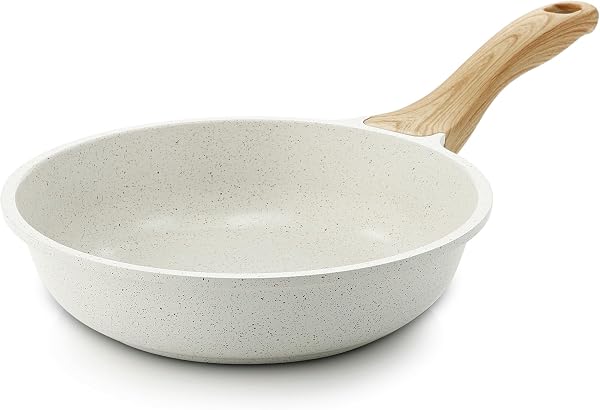
Quick facts
| Dishwasher safe? | No — Not dishwasher safe |
|---|---|
| Category | Cookware |
| Source | AI-reviewed · manufacturer guidance & material science |
| Last checked | 2026-07-28 |
Why
Ceramic frying pans are made from a metal base (typically aluminum or stainless steel) coated with a sol-gel ceramic layer (often silica-based). While the metal base is dishwasher-safe, the ceramic coating is not. Dishwasher detergents are highly alkaline (pH 10-12) and contain abrasive particles that chemically attack the ceramic layer, causing it to become dull, porous, and prone to chipping. The high heat (up to 70°C/160°F) and prolonged moisture can also cause the coating to delaminate or peel. Most manufacturers, including GreenPan and T-fal, explicitly state that ceramic pans should be hand washed to preserve the nonstick performance. After repeated dishwasher cycles, the coating will lose its nonstick properties, food will stick, and the pan will need replacement. The handle (if plastic or wood) may also warp or crack, and any rivets or metal parts can discolor or corrode.
How do you wash Ceramic Frying Pan?
- Let the pan cool completely before washing to prevent thermal shock.
- Rinse with warm water to remove loose food particles.
- Use a soft sponge or cloth with mild dish soap and warm water.
- Gently scrub in circular motions; avoid abrasive pads or steel wool.
- Rinse thoroughly with clean water to remove all soap residue.
- Dry immediately with a soft towel to prevent water spots.
- Store with a protective liner (e.g., paper towel) between stacked pans to avoid scratching.
What happens if you put Ceramic Frying Pan in the dishwasher?
If you put a ceramic frying pan in the dishwasher, after just one wash you may notice a slight dulling of the glossy surface and a loss of the slick feel. After 5-10 washes, the coating will become visibly scratched, cloudy, and porous. Food will start to stick, and the pan will require more oil or butter. After 20+ washes, the ceramic layer may peel or flake off in patches, exposing the bare metal underneath. This damage is permanent and functional: the pan will no longer be nonstick, and the exposed metal can react with acidic foods, affecting taste and safety. The handle may also become loose or discolored. Ultimately, the pan's lifespan is drastically shortened from years to months.
Frequently asked questions
- Can I use metal utensils on a ceramic frying pan?
- No, metal utensils can scratch and chip the ceramic coating. Use silicone, wood, or nylon utensils to preserve the nonstick surface.
- What temperature can a ceramic frying pan withstand?
- Most ceramic pans are safe up to 450°F (230°C) on the stovetop, but high heat can degrade the coating over time. Avoid preheating on high or using it for broiling.
- Is the ceramic coating toxic if it flakes off?
- Ceramic coatings are generally considered non-toxic and free of PTFE and PFOA. However, ingesting flakes is not recommended, and the exposed metal may leach into food.
- How often should I replace a ceramic frying pan?
- With proper hand washing and care, a ceramic pan lasts 1-3 years. Replace it when food starts sticking or the coating shows visible wear.
More cookware
Popular checks
Last updated 2026-07-28. General guidance — always check your product’s care label. How we verify · Dishwasher care guides.