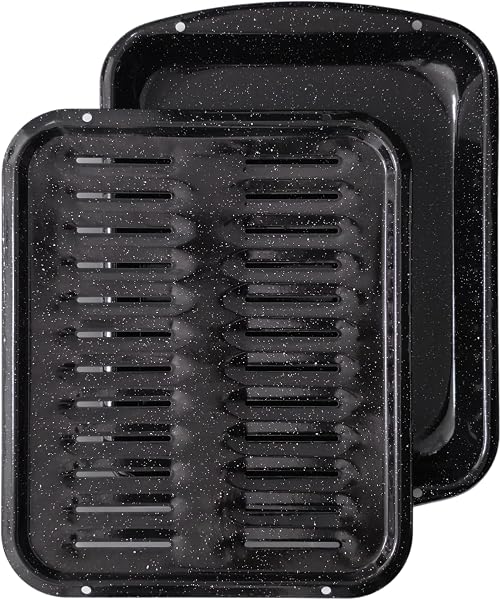
Is Broiler Pan dishwasher safe?
Sometimes — the metal pan body is typically dishwasher safe, but the nonstick coating (if present) and any plastic handles or silicone grips may degrade in the dishwasher.
Quick facts
| Dishwasher safe? | Sometimes — Sometimes — with care |
|---|---|
| Category | Bakeware |
| Source | AI-reviewed · manufacturer guidance & material science |
| Last checked | 2026-07-28 |
Why
Broiler pans are usually made of carbon steel or stainless steel, often with a nonstick coating (e.g., PTFE or ceramic) and sometimes with plastic or silicone handles. The metal body itself can withstand dishwasher heat and alkaline detergent without rusting if it's stainless steel, but carbon steel may rust if not dried immediately. The nonstick coating is vulnerable: high heat and harsh detergents can cause it to break down, peel, or blister over repeated washes. Plastic handles may warp or crack, and silicone grips can degrade or lose elasticity. Many manufacturers recommend hand washing to preserve the nonstick surface and handle integrity. If the pan is uncoated stainless steel, it is generally dishwasher safe, but carbon steel pans should be hand washed to prevent rust.
How do you wash Broiler Pan?
- Let the pan cool completely after broiling to avoid thermal shock.
- Remove any large food debris with a paper towel or scraper.
- Fill the sink with warm water and a mild dish soap.
- Use a non-abrasive sponge or soft brush to gently scrub the pan, avoiding steel wool or harsh scrubbers.
- For stuck-on residue, soak the pan in warm soapy water for 15-30 minutes before scrubbing.
- Rinse thoroughly with warm water and dry immediately with a soft cloth to prevent water spots or rust.
- If the pan has a nonstick coating, avoid stacking other pans directly on top to prevent scratching.
What happens if you put Broiler Pan in the dishwasher?
If you put a broiler pan with a nonstick coating in the dishwasher, after one wash you may notice slight dulling or water spots, but the coating likely remains intact. After repeated washes (e.g., 10-20 cycles), the nonstick coating will begin to break down: you may see peeling, blistering, or flaking, especially on the edges and raised ridges. The coating can also become less effective, causing food to stick. For uncoated carbon steel pans, one wash may cause surface rust if not dried immediately; repeated washes will lead to more rust and pitting. Stainless steel pans may develop a cloudy film (etching) from alkaline detergents over time, but this is cosmetic and does not affect performance. Plastic handles may warp or crack after several cycles, making the pan unsafe to handle. The damage is often functional: a degraded nonstick coating can flake into food, and a warped handle can break.
Frequently asked questions
- Can I use metal utensils on a nonstick broiler pan?
- No, metal utensils can scratch and damage the nonstick coating. Use silicone, wood, or plastic utensils instead.
- How do I remove burnt-on grease from a broiler pan?
- Sprinkle baking soda over the pan, add a little water to make a paste, let it sit for 15 minutes, then scrub with a non-abrasive sponge. For stubborn residue, add a layer of dryer sheets or fabric softener sheets with warm water and soak overnight.
- Is it safe to broil with a nonstick coating?
- Yes, most nonstick broiler pans are safe up to 500°F (260°C), but avoid broiling at the highest setting for extended periods, as overheating can damage the coating and release fumes.
- Can I put a broiler pan in the oven?
- Yes, broiler pans are designed for oven use. Check the manufacturer's maximum temperature rating, typically 450-500°F for nonstick pans and higher for stainless steel.
More bakeware
Popular checks
Last updated 2026-07-28. General guidance — always check your product’s care label. How we verify · Dishwasher care guides.